Google Logo Tributes


Re: Google's tribute to Mahatma Gandhi
Google seems to be the onkly one doing something creative online?
-
Allen Mathews

- Posts: 435
- Joined: Sun May 14, 2006 4:23 pm
- Location: Chennai
Re: Google's tribute to Mahatma Gandhi
here's their logo commemorating the lunar eclipse online.
[youtube]1YnxeazsY8I[/youtube]
[youtube]1YnxeazsY8I[/youtube]
- Attachments
-
Hello! I am Allen Mathews. I want to make films.


Re: Google's tribute to Mahatma Gandhi
Google India Independence Day logo
- Attachments
-
mere...paise zara badhayenge...Boss??

Re: Google's tribute to Mahatma Gandhi
Happy Birthday Google!
- Attachments
-
Kikikikikiki bleach-treated my avatar! Isn't she sweet?

Re: Google's tribute to Mahatma Gandhi
November 18, 2011. Louis Daguerre's Birthday.
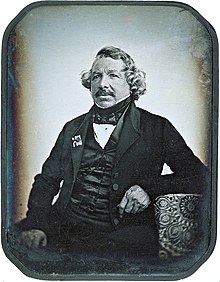
Biography
Daguerre was born in Cormeilles-en-Parisis, Val-d'Oise, France. He apprenticed in architecture, theatre design, and panoramic painting with Pierre Prévost, the first French panorama painter. Exceedingly adept at his skill for theatrical illusion, he became a celebrated designer for the theater and later came to invent the Diorama, which opened in Paris in July 1822.
In 1822[1] Joseph Nicéphore Niépce produced the world's first permanent photograph (known as a Heliograph). Daguerre partnered with Niépce three years later, beginning a four-year cooperation.[2] Niépce died suddenly in 1833. The main reason for the "partnership", as far as Daguerre was concerned, might have been connected to his already famous dioramas. Niépce was a printer and his process was based on a faster way to produce printing plates. Daguerre perhaps thought that the process developed by Niépce could help speed up his diorama creation.
Daguerre announced the latest perfection of the Daguerreotype, after years of experimentation, in 1839, with the French Academy of Sciences announcing the process on January 7 of that year. Daguerre's patent was acquired by the French Government, and, on August 19, 1839, the French Government announced the invention was a gift "Free to the World."
Niépce's son and Daguerre obtained a pension from the Government in exchange for freely sharing the details of the process. Daguerre died on July 10 1851 of a heart attack in Bry-sur-Marne, 12 km (7 mi) from Paris. A monument marks his grave there.
Daguerre's name is one of the 72 names inscribed on the Eiffel tower.
Biography
Daguerre was born in Cormeilles-en-Parisis, Val-d'Oise, France. He apprenticed in architecture, theatre design, and panoramic painting with Pierre Prévost, the first French panorama painter. Exceedingly adept at his skill for theatrical illusion, he became a celebrated designer for the theater and later came to invent the Diorama, which opened in Paris in July 1822.
In 1822[1] Joseph Nicéphore Niépce produced the world's first permanent photograph (known as a Heliograph). Daguerre partnered with Niépce three years later, beginning a four-year cooperation.[2] Niépce died suddenly in 1833. The main reason for the "partnership", as far as Daguerre was concerned, might have been connected to his already famous dioramas. Niépce was a printer and his process was based on a faster way to produce printing plates. Daguerre perhaps thought that the process developed by Niépce could help speed up his diorama creation.
Daguerre announced the latest perfection of the Daguerreotype, after years of experimentation, in 1839, with the French Academy of Sciences announcing the process on January 7 of that year. Daguerre's patent was acquired by the French Government, and, on August 19, 1839, the French Government announced the invention was a gift "Free to the World."
Niépce's son and Daguerre obtained a pension from the Government in exchange for freely sharing the details of the process. Daguerre died on July 10 1851 of a heart attack in Bry-sur-Marne, 12 km (7 mi) from Paris. A monument marks his grave there.
Daguerre's name is one of the 72 names inscribed on the Eiffel tower.
- Attachments
-
Re: Google Logo Tributes
Google never seizes to amaze my with their innovative work with logo's. They actually do seem like the only ones who keep their creativity fresh on the internet....
Re: Google Logo Tributes
Diego Rivera's 125th Birthday.
Diego Rivera was born in Guanajuato, Guanajuato, to a well-to-do family. Rivera was descended from Spanish nobility on his father's side. Diego had a twin brother named Carlos, who died two years after they were born. From the age of ten, Rivera studied art at the Academy of San Carlos in Mexico City. He was sponsored to continue study in Europe by Teodoro A. Dehesa Méndez, the governor of the State of Veracruz.
After arrival in Europe in 1907, Rivera initially went to study with Eduardo Chicharro in Madrid, Spain, and from there went to Paris, France, to live and work with the great gathering of artists in Montparnasse, especially at La Ruche, where his friend Amedeo Modigliani painted his portrait in 1914.His circle of close friends, which included Ilya Ehrenburg, Chaim Soutine, Amedeo Modigliani and Modigliani's wife Jeanne Hébuterne, Max Jacob, gallery owner Leopold Zborowski, and Moise Kisling, was captured for posterity by Marie Vorobieff-Stebelska (Marevna) in her painting "Homage to Friends from Montparnasse" (1962).
In those years, Paris was witnessing the beginning of cubism in paintings by such eminent painters as Pablo Picasso and Georges Braque. From 1913 to 1917, Rivera enthusiastically embraced this new school of art. Around 1917, inspired by Paul Cézanne's paintings, Rivera shifted toward Post-Impressionism with simple forms and large patches of vivid colors. His paintings began to attract attention, and he was able to display them at several exhibitions.
Diego Rivera was born in Guanajuato, Guanajuato, to a well-to-do family. Rivera was descended from Spanish nobility on his father's side. Diego had a twin brother named Carlos, who died two years after they were born. From the age of ten, Rivera studied art at the Academy of San Carlos in Mexico City. He was sponsored to continue study in Europe by Teodoro A. Dehesa Méndez, the governor of the State of Veracruz.
After arrival in Europe in 1907, Rivera initially went to study with Eduardo Chicharro in Madrid, Spain, and from there went to Paris, France, to live and work with the great gathering of artists in Montparnasse, especially at La Ruche, where his friend Amedeo Modigliani painted his portrait in 1914.His circle of close friends, which included Ilya Ehrenburg, Chaim Soutine, Amedeo Modigliani and Modigliani's wife Jeanne Hébuterne, Max Jacob, gallery owner Leopold Zborowski, and Moise Kisling, was captured for posterity by Marie Vorobieff-Stebelska (Marevna) in her painting "Homage to Friends from Montparnasse" (1962).
In those years, Paris was witnessing the beginning of cubism in paintings by such eminent painters as Pablo Picasso and Georges Braque. From 1913 to 1917, Rivera enthusiastically embraced this new school of art. Around 1917, inspired by Paul Cézanne's paintings, Rivera shifted toward Post-Impressionism with simple forms and large patches of vivid colors. His paintings began to attract attention, and he was able to display them at several exhibitions.
- Attachments
-
Kikikikikiki bleach-treated my avatar! Isn't she sweet?
-
amey katkar

- Posts: 971
- Joined: Tue Nov 15, 2011 3:19 pm
Re: Google Logo Tributes
the best 1 i remeber was of ECLIPSE...tht was awesome...!!!
no copy only inspiration..whatever
Re: Google Logo Tributes
Today is Robert Noyce's 84th Birthday.
Robert Norton Noyce (December 12, 1927 – June 3, 1990), nicknamed "the Mayor of Silicon Valley", co-founded Fairchild Semiconductor in 1957 and Intel in 1968. He is also credited (along with Jack Kilby) with the invention of the integrated circuit or microchip which fueled the personal computer revolution and gave Silicon Valley its name.[1][nb 1] Noyce was also a mentor and father-figure to an entire generation of entrepreneurs.
Early life
Noyce was born on December 12, 1927, in Burlington, Iowa.[nb 2][nb 3][2][3][4][5][6][7][8][9] He was the third of four sons[5][6] of the Rev. Ralph Brewster Noyce.[10][11] His father was a 1915 graduate of Doane College, a 1920 graduate of Oberlin College, and a 1923 graduate of Chicago Theological Seminary. The Reverend Noyce was a Congregational clergyman and the associate superintendent of the Iowa Conference of Congregational Churches in the 1930s and 1940s. His mother, Harriet May Norton, a 1921 graduate of Oberlin College, was the daughter of the Rev. Milton J. Norton, a Congregational clergyman, and Louise Hill. She has been described as an intelligent woman with a commanding will.[12]
His earliest childhood memory involves beating his father at ping pong and feeling absolutely devastated when his mother's reaction to this thrilling news was a distracted "Wasn't that nice of Daddy to let you win?" Even at the age of five, Noyce was offended by the notion of intentionally losing at anything. "That's not the game," he sulked to his mother. "If you're going to play, play to win!"[13]
In the summer of 1940, when he was 12, he built a boy-sized aircraft with his brother, which they used to fly from the roof of the Grinnell College stables. Later he built a radio from scratch and motorized his sled by welding a propeller and an engine from an old washing machine to the back of it.[14]
Details here
Robert Norton Noyce (December 12, 1927 – June 3, 1990), nicknamed "the Mayor of Silicon Valley", co-founded Fairchild Semiconductor in 1957 and Intel in 1968. He is also credited (along with Jack Kilby) with the invention of the integrated circuit or microchip which fueled the personal computer revolution and gave Silicon Valley its name.[1][nb 1] Noyce was also a mentor and father-figure to an entire generation of entrepreneurs.
Early life
Noyce was born on December 12, 1927, in Burlington, Iowa.[nb 2][nb 3][2][3][4][5][6][7][8][9] He was the third of four sons[5][6] of the Rev. Ralph Brewster Noyce.[10][11] His father was a 1915 graduate of Doane College, a 1920 graduate of Oberlin College, and a 1923 graduate of Chicago Theological Seminary. The Reverend Noyce was a Congregational clergyman and the associate superintendent of the Iowa Conference of Congregational Churches in the 1930s and 1940s. His mother, Harriet May Norton, a 1921 graduate of Oberlin College, was the daughter of the Rev. Milton J. Norton, a Congregational clergyman, and Louise Hill. She has been described as an intelligent woman with a commanding will.[12]
His earliest childhood memory involves beating his father at ping pong and feeling absolutely devastated when his mother's reaction to this thrilling news was a distracted "Wasn't that nice of Daddy to let you win?" Even at the age of five, Noyce was offended by the notion of intentionally losing at anything. "That's not the game," he sulked to his mother. "If you're going to play, play to win!"[13]
In the summer of 1940, when he was 12, he built a boy-sized aircraft with his brother, which they used to fly from the roof of the Grinnell College stables. Later he built a radio from scratch and motorized his sled by welding a propeller and an engine from an old washing machine to the back of it.[14]
Details here
- Attachments
-
Kikikikikiki bleach-treated my avatar! Isn't she sweet?
-
amey katkar
- Posts: 971
- Joined: Tue Nov 15, 2011 3:19 pm
Re: Google Logo Tributes

Holiday greetings are a selection of greetings that are often spoken with good intentions to strangers, family, or friends, in nations around the world, during the months of December and January.
Holidays with greetings include Christmas, Eid ul-Fitr, New Year's Day, Chinese New Year, Thanksgiving (United States), and Hanukkah. Some greetings are more prevalent than others, depending on the cultural and religious status of any given area.
Typically, a greeting consists of the word "Happy" followed by the holiday, such as "Happy Hanukkah" or "Happy New Year", although the phrase "Merry Christmas" or "Seasons Greetings" can be a notable exception.
In the United States, the collective phrase "Happy Holidays" is often used as a generic cover-all greeting for all of the winter holidays, Thanksgiving, Christmas Day, New Year's Day, Hanukkah, and Kwanzaa.
no copy only inspiration..whatever
-
amey katkar
- Posts: 971
- Joined: Tue Nov 15, 2011 3:19 pm

Re: Google Logo Tributes
another one. this one is for Christmas 2011.
- Attachments
-
Kikikikikiki bleach-treated my avatar! Isn't she sweet?
Re: Google Logo Tributes
heres for the new year's
- Attachments
-
Kikikikikiki bleach-treated my avatar! Isn't she sweet?